

Google Nano Banana Pro represents Google’s next big step forward in AI image generation. It builds on the momentum created earlier in 2025 when the company released its first “Nano Banana” model, officially known as Gemini 2.5 Flash Image. That version quickly captured global attention for its playful ability to turn ordinary photos into toy-like 3D figurines, blend multiple images, and make creative editing accessible to everyday users. Within a short period, the Gemini app surged to tens of millions of users, generating more than 200 million edited images and proving just how hungry people are for intuitive, visual-focused AI tools.
Google Nano Banana Pro AI Model
Today, Google has unveiled Nano Banana Pro, the next-generation model built on Gemini 3 Pro Image architecture.
Designed for higher-fidelity visuals and more professional use-cases, Nano Banana Pro introduces advanced controls over lighting, camera angle, depth of field, and image composition. It supports up to 4K resolution output and offers multilingual text rendering directly within images.
Critically, it also connects with Google Search’s knowledge base, allowing images to reflect real-world information (like infographics of current weather or data visualisations) rather than generic visuals.
As Google describes: “Turn your visions into studio-quality designs with unprecedented control, improved text rendering and enhanced world knowledge.”
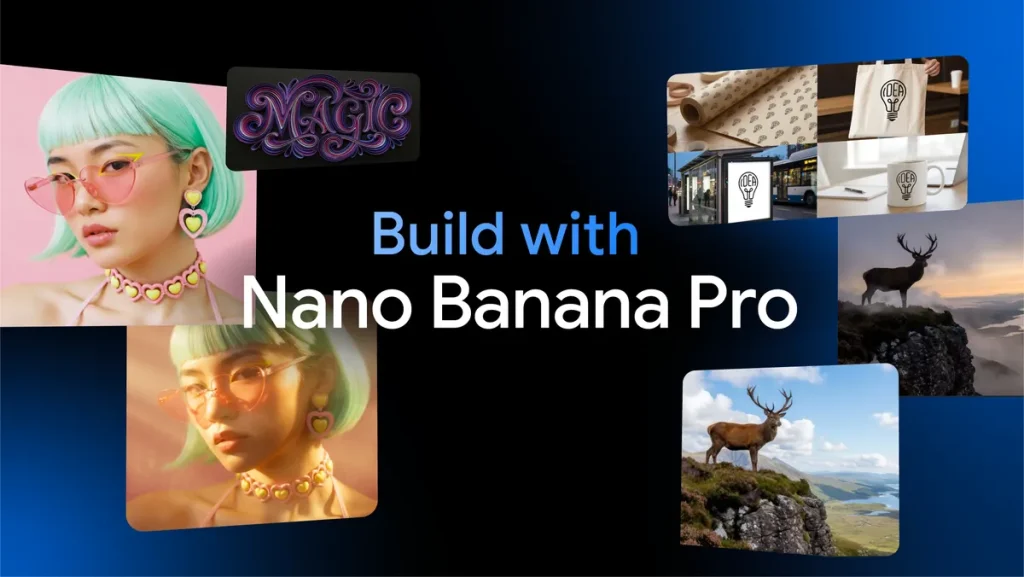
Google Nano Banana Pro – Image Generation
The Nano Banana Pro image generation workflow aims to shift from a toy-style image creator into a full-blown content-production engine. Key features include:
- Ability to combine up to 14 reference images and maintain consistency across characters or products.
- Excellent text rendering in various languages, with legible fonts and brand-ready typography embedded within the generated visual.
- Enhanced editing capabilities: refine lighting, change focus, adjust camera angles, apply colour grading, and customise output, making it viable for marketing, advertising and enterprise design workflows.
- For enterprise users, Nano Banana Pro is available through Vertex AI and Google Workspace and includes features like SynthID watermarking for provenance of AI-generated content.
- Google’s rollout notes that Workspace Business Standard/Plus, Google AI Pro/Ultra users, and many education/nonprofit plans can access Nano Banana Pro from November 20, 2025.
- The introduction of this model signals Google’s ambition to dominate not just AI chat but AI image-creation, an area increasingly demanded by brands, creators and agencies.
Why this Matters
Google’s AI Nano Banana Pro launch matters for several reasons. First, it extends the role of AI from text-based assistants into rich visual generation, where commercial demand is soaring. Second, it raises the bar for image-AI quality, targeting professional output rather than only novelty. Third, by embedding text, real-world knowledge and multilingual support, Google is positioning itself to compete with other generative-AI leaders in creative workflows.
From “Google nano banana” making cute figurines to “Nano Banana Pro” enabling full-scale design assets, this evolution reflects the pace at which generative AI is moving.
Bottom Line
With Google’s Nano Banana Pro, the company has raised the bar for AI image generation, merging studio-quality output, advanced controls and real-world grounding. For creators, marketers and enterprises, this new model opens fresh possibilities.
For more in-depth analysis on generative AI models and creative tools, visit our homepage.
FAQ
1. What is Google Nano Banana Pro?
Google Nano Banana Pro is Google’s latest advanced image-generation system designed to create high-quality visuals with precise control over lighting, depth, and composition.
2. How does the Pro model differ from the earlier Nano Banana version?
The earlier release became popular for playful, toy-style 3D transformations. The newer Pro edition focuses on professional-grade results, offering 4K output, improved text clarity, and more detailed camera and lighting adjustments.
3. Can this model produce high-resolution visuals?
Yes. It supports 4K image generation, making it suitable for advertising creatives, campaign assets, and polished visual content.
4. Does it handle text inside images accurately?
It delivers a major upgrade in text rendering. The tool can generate clean, readable text in multiple languages directly within the image, which is useful for posters, banners, and branded graphics.
5. Where can people access this new system?
It’s available through Google Workspace, Vertex AI, and certain Google AI subscription plans. Many Business, Education, and nonprofit users will gain access starting November 20, 2025.
6. Can I use several reference images when creating visuals?
Yes. You can work with up to 14 reference images to maintain consistent characters, themes, or product elements across multiple designs.
7. Is the Pro edition suitable for businesses and creative teams?
Absolutely. It includes enterprise-focused features like SynthID watermarking, reliable output controls, and integration with Workspace apps, making it practical for agencies and brand teams.
8. Why is this launch important for creators and marketers?
This release shifts AI visuals from simple, experimental tools to a more professional creative workflow. It helps people turn ideas into polished visuals faster without needing complex editing software.

